
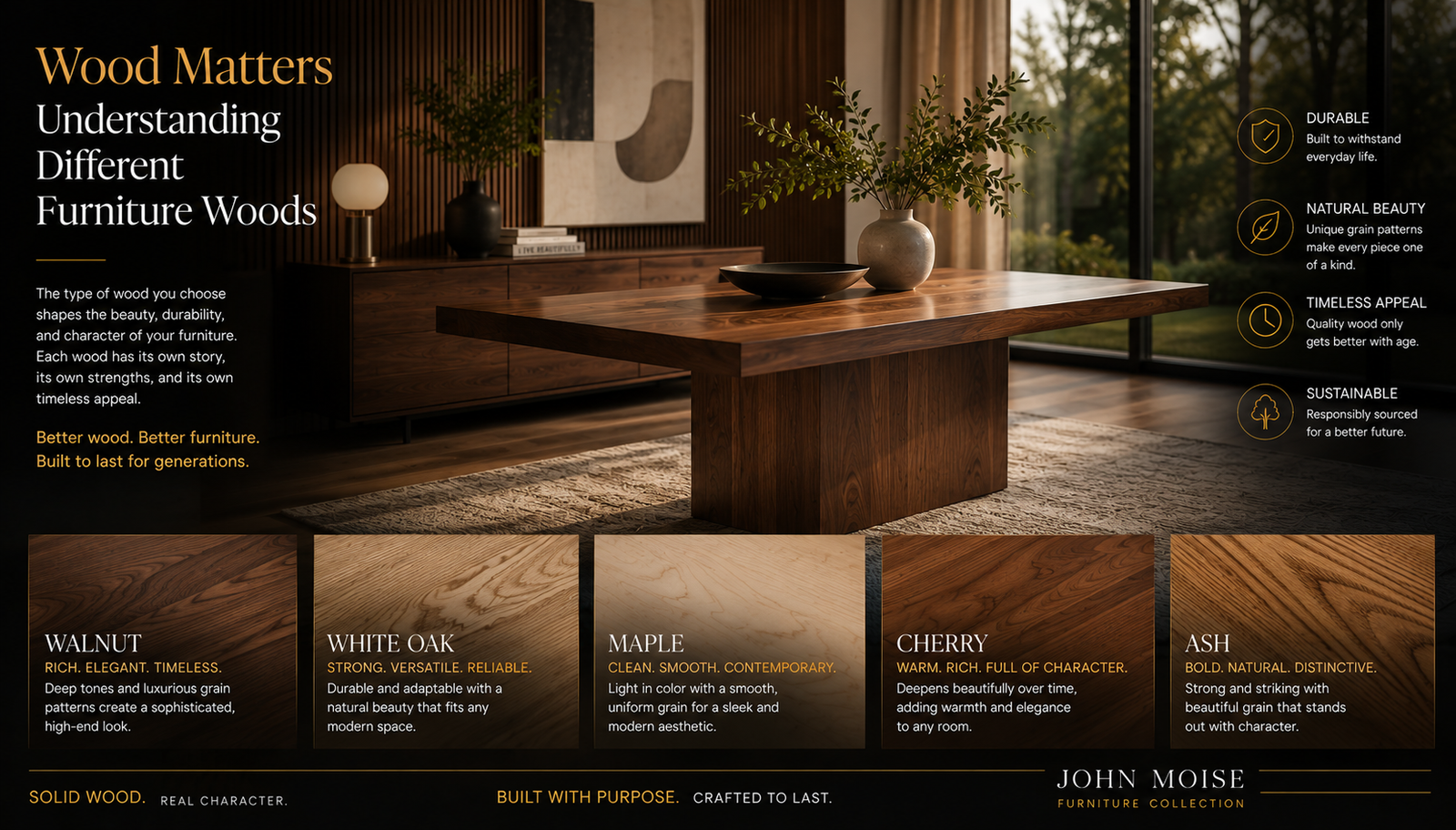
Wood Matters: Understanding Different Furniture Woods
When it comes to handcrafted furniture, design is only part of the story. The materials used to create a piece play an equally important role in its beauty, durability, character, and longevity. Among all furniture materials, wood remains one of the most timeless and sought-after choices.
But not all woods are created equal.
Different wood species offer unique grain patterns, colors, strengths, and personalities that influence both the appearance and performance of furniture. Understanding these differences can help you choose pieces that fit your style, lifestyle, and long-term expectations.
At John Moise Furniture Collection, we believe that selecting the right wood is one of the most important decisions in the furniture-making process.
Why Wood Selection Matters
Wood is more than a building material—it is a natural element that gives furniture warmth, character, and authenticity.
The type of wood used can affect:
Durability
Appearance
Grain pattern
Color
Weight
Maintenance requirements
Long-term performance
Every species has its own strengths, making certain woods better suited for specific furniture applications.
Understanding these differences helps ensure that your furniture not only looks beautiful but also performs well for years to come.
Walnut: Rich, Elegant, and Timeless
Walnut is often considered one of the most luxurious furniture woods available.
Known for its deep chocolate-brown tones and striking grain patterns, walnut brings warmth and sophistication to modern interiors. Its rich appearance makes it a favorite choice for dining tables, coffee tables, desks, and statement furniture pieces.
Benefits of Walnut
Rich natural color
Beautiful grain variation
Strong and durable
Ages gracefully
Premium appearance
Walnut is ideal for homeowners seeking furniture that feels refined, modern, and timeless.
White Oak: Strong and Versatile
White oak has become increasingly popular in contemporary furniture design.
Its lighter color palette and subtle grain patterns make it highly versatile across a variety of design styles, from modern minimalism to rustic contemporary interiors.
White oak is also known for exceptional durability, making it a practical choice for furniture that sees daily use.
Benefits of White Oak
Excellent durability
Attractive grain texture
Lighter modern appearance
Highly versatile
Resistant to wear
White oak balances beauty and performance exceptionally well.
Maple: Clean and Contemporary
Maple is prized for its smooth texture and clean appearance.
Its light color and subtle grain create a contemporary look that works particularly well in modern interiors. Maple is also one of the harder domestic hardwoods, making it a durable choice for furniture that experiences frequent use.
Benefits of Maple
Clean, uniform appearance
Excellent strength
Smooth grain
Modern aesthetic
Durable surface
Maple is perfect for those who appreciate simplicity and understated elegance.
Cherry: Warm and Full of Character
Cherry wood is beloved for its rich color and natural aging process.
Over time, cherry develops a deeper, warmer tone that enhances its beauty and uniqueness. Its smooth grain and luxurious appearance have made it a favorite among furniture makers for generations.
Benefits of Cherry
Rich warm tones
Beautiful aging characteristics
Smooth grain pattern
Elegant appearance
Timeless appeal
Cherry furniture often becomes even more beautiful with age.
Ash: Contemporary and Durable
Ash offers a distinctive grain pattern and impressive strength.
Its lighter color and bold texture make it an excellent choice for modern furniture designs that emphasize natural beauty and visual interest.
Ash is frequently used in contemporary furniture because it combines durability with striking aesthetics.
Benefits of Ash
Distinctive grain patterns
Excellent strength
Modern appearance
Good shock resistance
Lightweight relative to its strength
Ash creates furniture that feels both contemporary and organic.
Understanding Wood Grain
One of the most fascinating aspects of wood furniture is the grain.
Wood grain refers to the natural patterns created by a tree’s growth rings. These patterns contribute significantly to the character and beauty of a furniture piece.
Some woods feature:
Straight grain
Wavy grain
Cathedral grain
Curly grain
Highly figured grain
These natural variations ensure that every handcrafted piece is unique.
No two boards—and no two furniture pieces—are exactly alike.
Solid Wood vs. Engineered Materials
When shopping for quality furniture, it’s important to understand the difference between solid wood and engineered materials.
Solid Wood
Natural beauty
Greater longevity
Repairable and refinishable
Unique grain patterns
Long-term value
Engineered Materials
Lower cost
Consistent appearance
Often used in mass production
Limited refinishing potential
While engineered materials have their place, solid wood furniture typically offers superior durability, character, and value over time.
Choosing the Right Wood for Your Home
The best wood for your furniture depends on your priorities.
If you prefer:
Luxury and Rich Character
Consider walnut.
Bright, Modern Spaces
Consider white oak or maple.
Warm Traditional Elegance
Consider cherry.
Bold Natural Texture
Consider ash.
Each wood species offers its own unique combination of beauty and functionality.
The John Moise Furniture Collection Approach
At John Moise Furniture Collection, we believe exceptional furniture begins with exceptional materials. That’s why we carefully select wood species based on quality, beauty, durability, and how they complement modern design.
Every grain pattern, color variation, and natural detail contributes to the character of the finished piece. Rather than hiding these features, we celebrate them—allowing the natural beauty of the wood to become part of the furniture’s story.
Because when it comes to handcrafted furniture, wood isn’t just a material.
It’s the foundation of everything we create.


Add a review
Your email address will not be published. Required fields are marked *